


How Not to Lose Your Best Pharmaceutical Leadership Candidates During the Hiring Process
The candidates you lose are almost never lost at the offer. They are lost in the weeks when nothing appears to be happening, and by the time you notice, the decision has already been made somewhere you were not present. There is one part of this we see that you do not. When a senior candidate withdraws […]The candidates you lose are almost never lost at the offer. They are lost in the weeks when nothing appears to be happening, and by the time you notice, the decision has already been made somewhere you were not present.
There is one part of this we see that you do not. When a senior candidate withdraws from a process at week ten, they rarely tell the hiring company why. They give a reason that costs nobody anything, usually a change in personal circumstances or a decision to stay put for now. They tell a search consultant something considerably more specific. Across enough of those conversations, the reasons stop looking like individual decisions and start looking like a pattern, and the pattern is almost always about time and certainty rather than about money.
The ground around restrictive covenants has also shifted. The federal position that many organizations were expecting has not arrived and enforceability continues to be governed by state law, which has been moving in different directions in different places. What a covenant is worth now depends on where your candidate lives and which state your contract names. For a hiring team this is a practical point rather than a legal one. Covenants have become more complicated to work through rather than less and the work needs to happen earlier in the process than it used to.
None of this is a reason to run a shallow process and pharmaceutical leadership hiring is slower for reasons that are entirely legitimate. Multiple stakeholder functions hold a veto and debarment, and exclusion screening is not optional. A quality or regulatory leader will be named on documents that go to the Food and Drug Administration, so the diligence is proportionate to the exposure. The problem is not that the process is thorough. The problem is that thoroughness and disorganization look identical from the candidate’s side of the table, and the candidate cannot tell which one they are experiencing.
The pool for these roles is small. A vice president of quality who has held the site during a preapproval inspection, worked in both sterile and oral solid dose, and can be trusted in front of an inspector is not a profile that exists in volume within commuting distance of any one site. You will meet the same shortlist again in two years. What those people remember is not your compensation package, it is whether you seemed like an organization that had its act together.
Part one. The decisions that are made before you speak to anybody
Almost everything that later costs you a candidate is fixed in the two weeks before the first conversation, when nobody feels any urgency because no candidate exists yet.
Can everyone with a veto be in a diary within ten business days?
Senior pharmaceutical hires carry more stakeholders than almost any other appointment. A site quality lead can require the site head, the head of quality for the network, the general manager, a human resources business partner, the chief executive officer for a smaller organization and, where the role touches a partner or a customer audit relationship, somebody from commercial. Every one of those people can slow the process and at least three of them can stop it.
The failure is rarely that these people disagree, but rather, because their diaries are booked. A process that needs six diaries and starts arranging them one stage at a time will run twelve weeks whatever anyone intends, because each new stage begins with a two week wait for availability.
Book the whole process into diaries before you go to market. Hold two dates for each stage as recurring slots and release them if they are not used. It feels wasteful to hold time for candidates you have not met, but it costs a great deal less than restarting a search.
Is your interview process designed or is it being assembled as you go?
Ask a hiring team at the outset how many stages there will be, who is in each one and what each stage is assessing that the previous one did not. A surprising number cannot answer, not through carelessness but because the process has always been assembled in response to whoever asks to be involved.
Candidates detect this immediately. Being told after the third interview that there is now a fourth is the single most reliable trigger for a senior candidate to start taking other calls, because it tells them the organization cannot make a decision and forecasts exactly what working there will feel like.
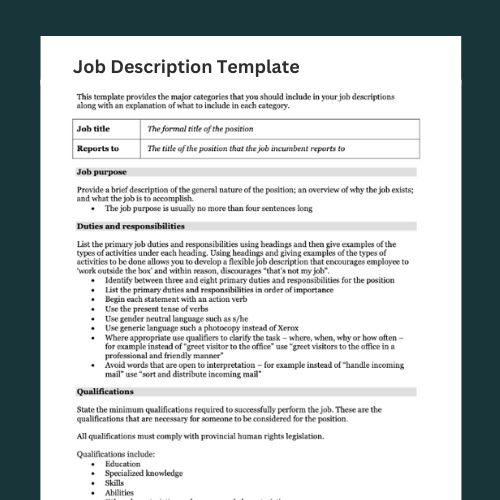
Write the stages down before the first approach. Name the people, the format and the specific thing each stage exists to establish. Give that document to candidates at the start. A candidate who knows there are four stages and a decision by a stated date will wait. A candidate who does not know how long anything will take will keep their options open, and keeping options open means running your process against somebody else’s.
Do you know which parts of your due diligence have the longest lead times?
Most hiring teams know the checks they need, but far fewer know how long each one takes and which ones can run at the same time as something else.
Debarment screening under section 306 of the Federal Food, Drug and Cosmetic Act, exclusion screening against the Office of Inspector General List of Excluded Individuals and Entities, exclusion checks in the System for Award Management, education and credential verification, professional licensure where it applies and international checks where a candidate has worked outside the United States all move at different speeds. International verification is usually the one that surprises people. So is any check that depends on a former employer’s human resources function responding over the holidays.
Map the lead times once, as a piece of internal work and keep the map. Then identify which checks require the candidate’s consent but not an offer of employment. Several do. Starting those in week one rather than week nine removes weeks from the end of the process, which is exactly where weeks are most expensive because that is the point at which the candidate is closest to accepting something else.
Have you established what your candidate is actually restricted from doing?
Restrictive covenants in this sector are more likely to bite than in most, because the candidate pool is concentrated, competitors are identifiable and the confidential information is genuinely valuable. Enforceability turns on state law, and the states do not treat these agreements the same way, so an assumption carried over from your last hire in another state is worth checking.
The practical failure is not that a covenant blocks a hire, but rather it is that nobody looks at the covenant until after the offer, at which point a solvable problem arrives at the worst possible moment. A candidate who has already accepted, already told their family and already imagined the new role now finds their start date pushed by a quarter, or the role narrowed to exclude the part they wanted. That is the point at which people go back to their current employer, and their current employer is ready.
Raise it in the first conversation. Ask the candidate to share their agreement early, get counsel’s read on it while the process is still running and tell the candidate plainly what you think can be managed and what cannot. This is fixable without hiring anybody. It requires somebody to read a document eight weeks earlier than they currently do.
Part two. What happens to a candidate while your process runs
The process feels continuous to you because you are in it every day. To the candidate it is a series of short events separated by long silences, and the silences are where the damage occurs.
What does the candidate hear from you between stages?
Nothing is the most common answer. A candidate who interviews on a Thursday and hears nothing for eighteen days has not been told they are unsuccessful. They have been told something they consider more useful, which is how much of a priority this appointment is.
Silence is never read as neutral, but rather that a decision that has already gone against them, or as an organization that does not move. Neither reading makes them more likely to accept.
Set a contact rhythm before the search opens and hold to it even when there is nothing to report. A short message saying that the panel is being scheduled, and a decision is expected by a named date preserves engagement almost as well as good news, because what a senior candidate actually wants is not constant reassurance. It is evidence that somebody is in control of the timetable.
Is your process asking the same five questions four times?
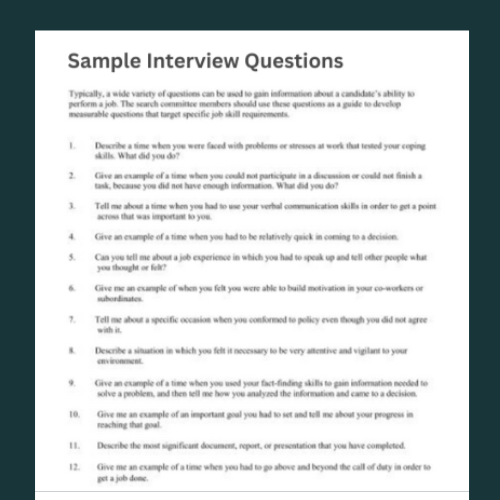
Where each stage is designed independently by whoever is running it, candidates get asked to explain their approach to deviation management, their view on data integrity and their reason for leaving three or four separate times.
For a senior candidate this is not merely tedious. It is diagnostic and tells them the panel does not talk to each other, that no notes are being shared and that they are likely to be assessed on which interviewer happened to warm to them rather than on anything structured.
Assign each stage one thing to establish and give every interviewer the previous stage’s notes before they meet the candidate. Interviewers who reference something the candidate said two stages ago are, on their own, one of the strongest engagement tools available. It tells the candidate they are being taken seriously by an organization that pays attention.
Are you asking candidates for material they cannot legally give you?
Presentation tasks are common at this level and mostly reasonable. They become a problem when the brief effectively asks the candidate to bring their current employer’s material into your building. A ninety-day plan for your site is a fair request. An assessment of your competitive position against the company that currently employs them is not, and the strongest candidates will recognize the issue faster than the panel that set the task.
The candidate then has two options. Decline and look difficult or, comply and demonstrate that they will one day do the same to you. Some withdraw instead and they rarely explain which part of the brief caused it.
Set the task around your business using material you are willing to share and say explicitly that you are not asking for anything confidential to their current employer. That sentence does more for your standing with a serious candidate than the exercise itself.
Who is protecting the confidentiality of the person you are trying to hire?
This sector is small and the leadership layer within it is even smaller. Your candidate very likely knows people at your site, and people at your site very likely know their current employer. A process that circulates a resume to eleven people, half of whom have no assessment role, carries a real risk of exposure.
For a candidate in a critical regulated role, exposure is not just an inconvenience. It can cost them the position they currently hold, or at minimum, their standing in it. Candidates who sense a loose process will slow down, refuse site visits or withdraw, and they will not tell you that confidentiality was the reason.
Control the distribution list, name it to the candidate and arrange any site visit outside normal hours where they ask for it. Say out loud that you are treating the process as confidential. Very few organizations do and it is remembered.
Is compensation being discussed early enough to be useful?
Compensation conversations get deferred because they feel awkward and because nobody wants to anchor too early. The result is an offer that arrives at week eleven and lands short, which wastes everybody’s time and often ends the process outright.
In the United States market this matters more than base salary alone would suggest. Candidates leaving a larger pharmaceutical business will be forfeiting unvested equity and long-term incentive structures differ enough between organizations that two packages with identical headline numbers can be far apart in value. A candidate who has not been asked what they are leaving behind cannot tell you that your offer does not cover it until it is too late to fix.
Establish the range and the structure early, ask directly what will be forfeited and be explicit about whether any of it can be bought out. If it cannot, say so early. Candidates make peace with limits they know about, but rarely with limits that appear at the end.
Does the candidate meet anybody who is not assessing them?
Every conversation in a typical process is an evaluation. That is appropriate, but it means the candidate leaves with a great deal of information about how you assess and almost none about what the work is actually like.
Senior candidates are deciding whether to move their career and often their household. They are trying to establish whether the site is well run, whether the leadership team is stable and whether the problem they are being hired to solve is genuinely solvable. Nobody in a formal panel can answer that credibly because everybody in a panel is selling.
Build in one unstructured conversation with a peer who is not on the panel and not scoring. It costs an hour. It is consistently the thing candidates cite when they explain why they chose one offer over another.
Part three. The distance between yes and the first day
The process does not end at acceptance. In this sector the gap between acceptance and the first day is longer than in almost any other, and it is the least managed part of the whole exercise.
Have the clean hands checks started or are they waiting for the offer?
The standard sequence runs offer, acceptance, then checks. In a regulated business, that sequence adds weeks at the exact point where the candidate is most exposed to being pulled back and it creates a second problem. If something does surface late, you have already made an offer, told internal stakeholders and released the rest of the shortlist.
Start what can be started earlier, with the candidate’s consent and a clear explanation of why. Debarment and exclusion screening are public record checks and can begin well before an offer. Sequence the checks that require the most external cooperation first rather than in whatever order the form lists them.
The conversation that makes this work is a straightforward one. Tell the candidate at the outset that the role is regulated, that the screening is standard for anyone in a position of this kind and that you would rather run it early so their start date is not delayed. Senior people in this sector expect the scrutiny. What they do not expect and do not react well to, is being asked at week fourteen for something that could have been asked for at week two.
Does your offer survive the retention conversation the candidate is about to have?
When a critical regulated role resigns, most employer does not accept it lightly. They construct a reason to stay, and the reason is usually not just about money. It is a title, a reporting line change, a promise about the next site or a project the person has wanted for two years.
The counteroffer is far more effective when your own process has already given the candidate reasons to doubt. A slow, silent, disorganized process leaves the candidate resigning from a job they understand into an organization that has not yet demonstrated it can organize an interview schedule.
Anticipate it rather than reacting to it. Ask before the offer what their employer is likely to do, ask what would have to be true for them to stay and make sure the specific thing they want from the move is written into the offer rather than implied. Then keep talking to them during the notice period, which is where most counter offers land.
Is relocation being treated as a candidate decision or a family decision?
The specialist combination these roles demand narrows the pool sharply, and manufacturing and research sites are frequently not in large metropolitan areas. Insisting on local candidates for a profile that barely exists nationally is a choice to run a longer search, and organizations that make it often do not realize they have made it.
Relocation fails less often on the package than on the parts nobody discusses. Whether a spouse or partner can find comparable work locally. Schools and the timing against a school year. Whether the family has ever lived in that part of the country or even relocated before. A candidate will not raise most of this at interview because they do not want to look uncommitted and the decision then gets made at home without you.
Be relocation friendly in a way that is visible rather than technically true. State the package early instead of waiting to be asked. Fund a family visit rather than a candidate visit. Offer help with partner employment. Consider whether a phased start with remote working for a defined period would let a family move at the end of a school year rather than in the middle of one. If your competitors are hiring within a fifty-mile radius and you are hiring nationally, you are choosing from a substantially larger pool than they are, and that advantage is worth paying for.
What happens during the ten weeks after acceptance?
Two weeks is the convention in the United States, and it has very little to do with what happens at this level. A senior leader in a regulated business is handing over open deviations, audit commitments and in some cases a name that appears on a submission, and their employer will expect a proper transition rather than a courtesy notice. Add a contractual notice provision, which is common in these contracts even where it is unusual elsewhere in the business, and the realistic gap between acceptance and the first day is two to three months. In most organizations the process goes quiet the moment the contract is signed.
That silence is where late withdrawals happen. The candidate is still at their current employer, still visible to the people trying to retain them and increasingly unsure about a decision that no longer has anything attached to it. Every week of silence makes the new role more abstract and the current one more concrete.
Keep them connected. Send the board materials summary or the site newsletter. Have their future manager call every two or three weeks with no agenda. Invite them to something social. Where confidentiality allows, share the inspection calendar or the project plan they are inheriting so that the job becomes real before they arrive. This is inexpensive and it is the single most neglected part of senior hiring in this sector.
The thread that runs through all of it
Read back through the fourteen questions above and notice how few of them are about the candidate.
They are about whether your diaries were booked, whether your checks started early enough, whether somebody read the covenant, whether anyone called during the silence. None of that measures how good a candidate is. All of it determines whether the good ones are still there when you are finally ready to decide.
That is the useful part, because the size of the pool is not something you control. In a market where the profile you need might exist in a few dozen people nationally, the variable you can change is not who is available. It is whether the experience of dealing with you makes them want to say yes, and whether you got to that point before somebody else did.






Related Posts

The true cost of an unfilled leadership role in a regulated business
We work on regulated sites across the United States, which means we arrive after the vacancy has been running for a whil…

Why Senior Pharmaceutical Hires Often Fail
A meaningful proportion of the searches we are asked to run in this sector are second attempts. Either the first appoint…