


The right person, hired against the wrong brief
A guide to matching leadership profile to company stage in pharmaceuticals and life sciencesMost leadership hires that go wrong in this sector are not wrong people. They are capable people appointed against the wrong brief, and the brief was wrong before the search began.
We are asked to run are second attempts searches at times, either because the first appointment did not last or because the first process never produced one. We usually read the retrospective review before we start, and in a large number of those cases the person was perfectly able, however, the role they were recruited into was not the role they found when they arrived, or it stopped being that role within a year of their start date.
Pharmaceutical and biotech companies change shape and, in some cases, direction, faster than most businesses. A clinical readout, a financing round, a partnering deal, an inspection outcome or an approval can turn a research organization into a commercial one, or a growth company into a remediation project, inside a single budget cycle. A leader profiled for the company as it looked on the day the job description was drafted can be the wrong leader by the time their onboarding is finished.
In a regulated business that mismatch does not stay internal, it shows up as a delayed submission, a slipped launch or an inspection led by someone who was hired to do something else. It also shows up in the market, because senior people in this sector talk to each other, and a role that has turned over twice in three years becomes harder to fill a third time.
This guide works through thirteen questions, grouped by where the mismatch is created, namely, before the brief is written, when the profile is matched to the stage, in what the candidate is told and after the appointment.
PART ONE. BEFORE THE BRIEF IS WRITTEN
1. Was the brief written for the job title or for the job?
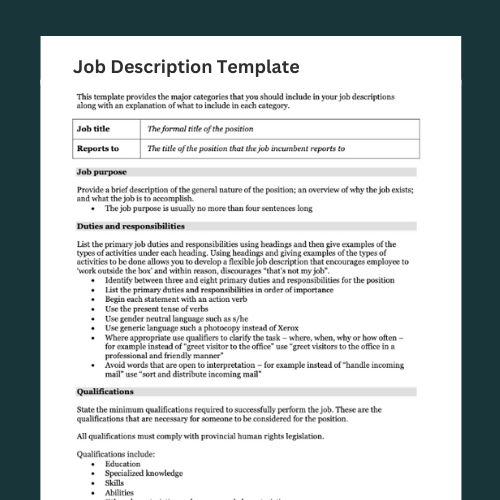
The fastest way to write a job description is to start from the title, Head of quality, vice president of regulatory affairs or chief operating officer. Each title carries an inherited template of responsibilities, and most hiring teams edit the template rather than starting from the work.
The trouble is that titles in this sector mean very different things from one company to the next. A head of quality at a sixty-person clinical stage biotech may be the entire quality function, writing the standard operating procedures, overseeing the contract manufacturers and preparing for a first pre-approval inspection with no team at all. A head of quality at a commercial manufacturer may run a department of eighty across two sites. The title is identical, but the job, the skills and the right candidate have almost nothing in common.
Titles also get inflated to attract candidates or held down to fit a compensation band. Either way the specification stops describing the role, and the candidates it attracts are responding to the label rather than the work.
What to do instead. Write the brief from the outcomes and choose the title last. Start with what must be true at twelve months and at twenty-four months, then the decisions the person will own, then the work that will actually fill their week. Once you know what the job is, pick the title that the right candidate would recognize as describing it.
2. Was it written for the last person who held the role?
The other common starting point is the previous incumbent. Their job description is on file, their strengths are fresh in everyone’s mind and so are their shortcomings, so the result is usually a brief for the predecessor with their weaknesses corrected.
That brief describes a role shaped around one person’s career, in a company at an earlier stage. The last head of manufacturing may have been appointed to take a process from pilot scale to clinical supply. If the next phase is technology transfer to a commercial site, process validation and launch readiness, a better version of the last person is still the wrong person.
Reacting against the predecessor is just as risky. A leader who was seen as too cautious gets replaced by one hired for pace, and the problem the cautious leader was competently managing resurfaces eighteen months later in an inspection.
What to do instead. Treat the previous job description as evidence of what the role was, not a draft of what it should be. Ask what the incumbent actually spent their time on, which parts of the job nobody else could have done and which parts they had absorbed because nobody else would. Then decide deliberately what belongs in the next version of the role and what belongs somewhere else.
3. Does the brief describe the work that actually fills the week?
Job descriptions are written about strategy whilst most senior roles in a regulated business are lived in the detail.
A vice president of clinical operations may be hired to shape development strategy and spend most of the first year managing contract research organization performance, vendor disputes and enrolment problems at underperforming sites. A chief commercial officer may be hired to build a launch and discover that the real work is securing payer access, which the brief mentioned in a single line. A head of regulatory affairs may be hired for submission strategy and find that the company’s regulatory function is one person and a shared drive.
When the gap between the specification and the working week is wide, two things happen. Capable people become frustrated quickly, and the candidates who would have enjoyed the real job never applied, because the advertised version did not describe it.
What to do instead. Ask the people who work alongside the role what its holder will spend their time doing in the first year. Put the unglamorous work into the brief in plain language because this filters out people who would leave and attracts people who are good at exactly that work, who are rarer and more valuable than the brief usually assumes.
4. Has everyone agreed what the role is for?
In venture backed and founder led companies it is common for the chief executive officer, the board and the lead investors to hold quite different views of what a senior hire is for. One wants a builder; another wants someone who will make the company look ready for a partner or an acquirer and a third wants a safe pair of hands for the next inspection. Each view is reasonable, but a brief that tries to satisfy all three produces a candidate who satisfies none of them.
The disagreement is usually invisible until the final interviews, when different stakeholders favor different candidates for reasons that turn out to be about the role rather than the people. By then the search has spent months looking for a composite.
What to do instead. Before the search starts, have the decision makers agree in writing the two or three outcomes that will define success in the role. If they cannot agree, the search is not ready to begin. This costs nothing, needs no hire and removes one of the most common reasons senior searches stall at the last stage.
PART TWO. MATCHING THE PROFILE TO THE STAGE
5. Which stage is your company actually in?
Company stage shapes a leadership profile more than any other single factor, and it is the factor most often left out of the brief. The same function needs a different kind of leader at each stage.
In a discovery or early clinical company, leaders build from very little. They write the first procedures, choose the first vendors and do much of the work themselves. Breadth, judgment under ambiguity and comfort with having no team matter more than experience running a large function.
In a late clinical or pre-launch company the work shifts toward readiness. Submissions, pre-approval inspection preparation, commercial supply decisions and building teams ahead of an approval date that may move. This stage rewards people who have been through a launch before, because the first time is expensive to learn on the job.
At launch and in early commercialization the priority is execution at pace across functions that did not exist two years earlier. Leaders here need to hire quickly, tolerate rough edges and keep a young organization compliant while it grows around them.
At scale the work becomes systems, consistency and cost. Multiple products, multiple sites and a larger regulatory footprint reward leaders who have run established functions and can build process without slowing the business down.
The difficulty is that companies rarely describe themselves accurately. Boards tend to describe the company they are building rather than the one that exists, so briefs get written for a commercial organization while the company is still two readouts away from a filing. The candidate hired against that brief arrives expecting infrastructure that is not there yet, or the company hires a builder for a role that is already an operating job.
What to do instead. State the current stage in the brief in plain terms, including what the company does not yet have. Then describe the stage the company expects to reach within two years and the event that is expected to trigger the change, whether that is a readout, a financing, a filing or an approval.
6. Will this person still be right in two years?
This is the question most briefs never ask, and it is the one that decides whether the appointment is still standing at the next stage transition.
A leader who is exactly right for a clinical stage company may not be right once the company is commercial. That is not a failure on either side, but it becomes one if nobody planned for it. The company outgrows the person, or the person was hired for a stage the company has not reached yet and spends two years frustrated.
There are three honest ways to handle it. Hire someone who has already operated at the next stage and is willing to work at the current one, accepting that they will cost more and may be less hands on than the role needs today. Hire for the current stage explicitly, tell the candidate so and plan the succession or restructure in advance. Or cover the transition with an interim leader and appoint the permanent leader for the stage the company is moving into.
The option that fails is the one most companies take by default, which is hiring for the present while telling the candidate, and themselves, that the role will grow with the business.
What to do instead. Write a paragraph in the brief describing the role at month twenty-four. Test candidates against the role today and the role in two years, then ask directly about the stage transitions they have lived through. People who have made the jump from one stage to the next once are far more likely to make it again.
7. Does your manufacturing and partnering model change the profile?
Two strategic decisions reshape senior roles more than most hiring teams account for, and both are often unresolved when the brief is written.
The first is how the company makes its product. A company that manufactures in house needs technical operations leaders who can run plants, people and capital projects. A company that outsources to contract development and manufacturing organizations needs leaders who can manage external partners, hold them to account on quality and supply and negotiate hard when a batch fails. These are different skill sets, and a strong plant leader is not automatically a strong external manufacturing leader.
The second is whether the company intends to commercialize its own products or partner them. A chief commercial officer hired to build a launch organization will not stay long if the board partners the asset out a year later. A head of business development hired for licensing work may be the wrong person if the company decides to build.
A change of modality has the same effect. A company moving from small molecules into biologics, or from biologics into cell and gene therapy, needs leaders with experience of the new manufacturing, quality and regulatory demands, not only seniority in the old ones.
What to do instead. Tie the brief to the business strategy explicitly. If the manufacturing or partnering decision has not been made, say so, and either hire for adaptability or wait until the decision is taken. Hiring a leader to build something the company may not build is one of the most expensive ways to lose a good person.
8. Is this a remediation role described as a steady state one?
A company that has received a warning letter, is working through significant inspection observations, has data integrity findings or is operating under a consent decree does not need an ordinary head of quality or head of manufacturing. It needs someone who has led remediation before, who has dealt with the Food and Drug Administration under pressure and who can rebuild systems and culture while production continues.
These roles are frequently advertised as steady state positions with terms like “lead a high performing team, maintain compliance, drive continuous improvement”. The candidate who responds to that description is often the wrong person for the real job, and the candidate who would be right for the real job does not recognize it in the advertisement.
Remediation and steady state leadership are often two roles in sequence. The person who is excellent at the first may not want the second, and the person who is excellent at the second may not survive the first.
What to do instead. Name the situation in the brief, at least in the version shared with shortlisted candidates. Consider whether the company needs a remediation leader now and a different permanent leader later, and whether an interim appointment for the remediation phase would protect both the business and the eventual permanent hire.
PART THREE. WHAT THE CANDIDATE IS TOLD
9. What does your preferred candidate not yet know?
Every organization has problems it would rather not lead with. In this sector the ones most often held back from senior candidates are regulatory shortcomings such as open inspection observations or a warning letter. Close behind are customer retention problems such as a contract manufacturer losing clients or a commercial team losing key accounts and employee retention problems such as high turnover in quality, manufacturing or research teams.
The instinct to hold these back is understandable, hiring teams worry that the best candidates will walk away. But in practice the opposite is usually true.
Senior candidates in this sector find out anyway, warning letters are published by the Food and Drug Administration. Former employees talk and the industry is small enough that a quality leader considering a role will usually know someone who has worked at the site. A candidate who discovers a serious problem during the process and was not told about it concludes that the company is either unaware of it or willing to conceal it, and neither conclusion helps.
A candidate who discovers it after they start is worse. The trust is gone in the first month, and the company has assessed and hired someone for a job that does not exist. The person who would have been right for the real situation, often someone who actively wants a turnaround, was never approached or never persuaded.
What to do instead. Make an honest list before the search starts of every issue a candidate in this role would be unhappy to discover in month three. Include regulatory history, customer and client losses, staff turnover, open investigations and anything else the new leader will inherit. That list is also the most useful input you have for writing the brief, because it usually describes the real job better than the job description does.
10. When and how should problems be disclosed?
Transparency does not mean opening every conversation with the company’s difficulties. It means that no candidate reaches the final stage of the process without a full and accurate picture of what they are walking into.
A staged approach to this works really well. At first approach, candidates need the headline shape of the role, including whether it is a build, an operating or a remediation brief. At shortlist, they need the material issues in outline. Before final interviews, and certainly before any offer, finalists should see the detail under a confidentiality agreement and should be able to speak to the person who owns each problem.
How problems are presented matters as much as when. An issue presented with its root cause, the plan to address it and the resources committed to that plan reads as a serious organization dealing with a real challenge. The same issue discovered by the candidate reads as a warning.
The candidate’s response to disclosure is also some of the best assessment evidence available. The people who lean in, ask sharp questions and start describing what they would do in the first ninety days are telling you something the interview format rarely reveals.
What to do instead. Build the disclosure into the process timetable rather than leaving it to the judgment of individual interviewers. Prepare the material before the search begins. None of this needs a hire, and it is one of the most effective ways to protect an appointment before it is made.
PART FOUR. AFTER THE APPOINTMENT
11. What happens when the company changes stage around the person?
Even a well matched appointment can become a mismatch. A positive readout, a failed trial, an acquisition, an approval or a regulatory setback can change the stage of the company faster than any leader can change their profile. The person who was right eighteen months ago may now be in a role that has moved on without them.
This is where many companies make an avoidable second mistake. They treat the mismatch as a performance problem, manage the person out and start a new search against a brief that is once again written for the moment rather than for the next two years.
Much of this is fixable without hiring anyone. The role can be redesigned around what the incumbent does well, with the new demands handled by a deputy, a new peer function or an interim specialist for a defined period. The reporting line can change, the scope can split into two roles, one of which the incumbent keeps. A leader who built the function from nothing may be exactly the right person to hand it on in a structured way, if the handover is planned rather than forced.
What to do instead. Review senior roles against the company’s stage at every major inflection point, not only when something goes wrong. Ask whether each role still describes the work, whether the person in it is still matched to the stage and what the role will look like after the next milestone. When a new appointment is needed, write that brief for the stage the company is entering, not the one it is leaving.
Summary
Every question in this guide is answered by the brief, or by the absence of one. The mismatch is decided when someone copies a job description from a title or a predecessor, describes the company it hopes to be rather than the one it is and holds back the problems that define the real job.
A leadership brief is not a description of a vacancy. It is a description of the company at a particular point in its development, and of where it is going next. Companies that write it that way hire people who are still in post, and still the right fit, at the next stage.






Related Posts

The Credential Bottleneck. Recruiting into Scarce-Credential Roles in Life Sciences
A significant share of the searches we are asked to run for research and development and manufacturing organizations in …

How Not to Lose Your Best Pharmaceutical Leadership Candidates During the Hiring Process
The candidates you lose are almost never lost at the offer. They are lost in the weeks when nothing appears to be happ…

The true cost of an unfilled leadership role in a regulated business
We work on regulated sites across the United States, which means we arrive after the vacancy has been running for a whil…

Why Senior Pharmaceutical Hires Often Fail
A meaningful proportion of the searches we are asked to run in this sector are second attempts. Either the first appoint…